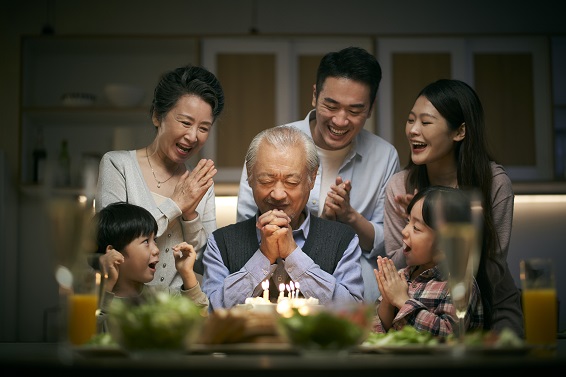
What allowances are available?
Allowances are intended to support basic living needs and dependants. They are fixed amounts that may be claimed if you meet the eligibility requirements. Common personal allowances include (applies to the 2025/26 year of assessment):
- Basic allowance: HK$132,000
- Married person’s allowance: HK$264,000
- Child Allowance (For each of the 1st to 9th child)
- HK$130,000 per child
- An additional HK$130,000 may be claimed for each child for the year of assessment in which the child is born.
- Dependent Parent and Dependent Grandparent Allowance (For each dependant)
- Parent / grandparent aged 60 or above or is eligible to claim an allowance under the Government’s Disability Allowance Scheme:
- Parent / grandparent aged 55 or above but below 60:
- Single parent allowance: HK$132,000
- Disabled Dependant Allowance (For each dependant): HK$75,000
- Personal Disability Allowance: HK$75,000
How are personal allowances calculated?
For a typical salaried person, if you are single with no children and no dependent parents, you can normally only claim the basic allowance. As your life stage changes—such as getting married, having children or starting to support elderly family members—you may be able to claim additional allowances on top of the basic allowance.
Assumed case A (single, no dependants)
- Annual salary including bonus: HK$400,000.
- Mandatory MPF contributions (5% cap): HK$18,000.
- Only the basic allowance is available.
Calculation steps:
- Total income: HK$400,000.
- Deduct MPF contributions: 400,000 – 18,000 = HK$382,000.
- Deduct basic allowance: 382,000 – 132,000 = HK$250,000.
- Tax is then computed under the progressive rates, and compared with the standard rate. The lower amount is payable.
Assumed case B (married, with one child)
- Joint assessment for a married couple; total family income for the year: HK$800,000.
- Total MPF deduction: HK$36,000.
- Claim married person’s allowance and one child allowance.
Calculation steps:
- Total income: HK$800,000.
- Deduct MPF contributions: 800,000 – 36,000 = HK$764,000.
- Deduct married person’s allowance and child allowance: 764,000 – 264,000 – 130,000 = HK$370,000.
- Tax is then computed under the progressive rates, and compared with the standard rate. The lower amount is payable.
What deductions are available?
In addition to allowances, you may reduce your tax by claiming allowable deductions. The table below sets out common categories of deductions and the applicable annual limits:
Category |
Description |
Annual limit |
Mandatory MPF contributions |
Mandatory contributions to MPF schemes |
HK$18,000 |
Tax Deductible Voluntary Contributions (TVC) to MPF schemes |
Qualifying voluntary MPF contributions |
Shares an annual cap of HK$60,000 with “Qualifying Annuity Premiums” |
Qualifying Annuity Premiums (QDAP) |
Premiums paid for qualifying annuity products |
Shares an annual cap of HK$60,000 with “Tax Deductible Voluntary Contributions” |
VHIS premiums |
Premiums paid under qualifying Voluntary Health Insurance Scheme (VHIS) policies; claimable by number of insured persons |
HK$8,000 per insured person; no limit on the number of insured persons |
Self-education expenses |
Tuition fees for approved courses related to your employment or profession |
HK$100,000 |
Approved charitable donations |
Donations to approved charitable institutions |
Deductible amount is capped at 35% of total income chargeable to tax |
Home loan interest |
Mortgage interest on a qualifying self-occupied dwelling |
HK$120,000; up to 20 years of assessment for the same property |
Domestic rents |
Deduction for rent paid for a qualifying dwelling |
HK$100,000 |
Elderly residential care expenses |
Fees paid to residential care homes for elderly dependants |
HK$100,000 for each eligible elderly person |
Assisted reproductive service expenses |
Qualifying medical expenses for assisted reproductive services |
HK$100,000 per marriage (shared by husband and wife) |
Practical tips for saving tax
Tip 1: Allocate family allowances strategically
- If both spouses are working, compare whether “separate taxation” or “joint assessment” results in a lower tax payable, before deciding whether to claim married person’s allowance.
- If a family has children, the couple may first assess both parties’ income and deductible amounts, and then decide whether all child allowances should be claimed by one spouse, so as to enhance the overall tax‑saving effect.
- Where parents or grandparents need to be supported, family members (such as siblings) may also consider letting the higher‑income individual claim the relevant allowance, as this may generate a greater tax benefit at a higher tax band.
Tip 2: Plan deductible spending in advance
Some deductible items also serve financial planning or protection needs. With appropriate planning, you may achieve both tax savings and longer-term financial objectives:
- Qualifying Annuity Premiums and Tax Deductible MPF Voluntary Contributions:
If you are in a higher tax band, increasing the relevant contributions within a year of assessment may help reduce your income chargeable to tax while also strengthening your retirement savings.
Prudential “PruRetirement Deferred Annuity Plan” is a Qualifying Deferred Annuity Policy (QDAP) certified by the Insurance Authority. In addition to providing stable monthly annuity income for up to 10 or 20 years in the future, qualifying premiums may be eligible for tax deduction, subject to the annual cap of HK$60,000 per taxpayer^.
- VHIS premiums:
If you have medical protection needs, you may review whether a qualifying Voluntary Health Insurance Scheme (VHIS) plan is suitable. This may help enhance your medical coverage while also allowing you to claim a tax deduction for the eligible premiums.
Prudential VHIS Series covers Government-recognised Standard Plans and Flexi Plans, offering protection options ranging from basic to more comprehensive to suit different needs. The series also provides a range of value-added services, such as 24-hour global emergency assistance, Treatment Sure service and green medical channel services, helping to provide more support from diagnosis and treatment through to recovery.
Tip 3: Record and spread your annual expenses to avoid wasting deductions
Each deductible item is subject to an annual cap. If the deductible amount for a particular item is approaching the annual limit, you may consider deferring part of the expense to the next year of assessment so that the deduction capacity is not wasted by exceeding the cap in the same year. For example:
- If you plan to enrol in multiple continuing education courses, consider spreading them across different years of assessment.
- If your annuity contributions or Tax‑Deductible Voluntary Contributions (TVC) are close to the annual deduction limit, you may consider arranging part of the contributions in the next year of assessment.
Tip 4: Use a tax calculator to estimate in advance
- There are many online tax calculators, such as the Prudential Tax Calculator*. By entering your income, allowances and deduction items, you can estimate your tax payable.
- It is advisable to do a trial calculation mid-year to understand your current tax position, and then decide whether you need to make additional deductible arrangements.